English
 Português
 Español
 русский
 中文简体
中文简体Rubber processing involves more than shaping a soft material into a finished part. Before a rubber product reaches its working condition, its internal structure has to change through curing. The process turns a workable rubber compound into a material with a more stable shape and elastic response.
Different ingredients take different roles during that change. A curing agent participates in the reactions that create connections between rubber polymer chains. An accelerator works around that reaction by helping it proceed at a suitable rate and under practical processing conditions.
The distinction can seem small when both materials are discussed as part of the same curing system. Their functions, however, are not interchangeable. Looking at how each material affects the process makes it easier to see why formulation decisions involve more than simply adding a curing ingredient.
Why Are Rubber Accelerators and Curing Agents Used Together?
Rubber compounds need a controlled curing process because uncured rubber does not have the internal structure required for many finished applications. Before curing, the material needs to remain workable enough for mixing, shaping, and forming. After curing, the polymer chains need a connected structure that allows the product to maintain its intended form and respond to mechanical loads.
A curing agent provides part of the chemical basis for that structural change. Depending on the selected curing system, it can react with the rubber and contribute to connections between polymer chains. Sulfur and peroxide-based materials are examples of curing agents used in different rubber systems.
An accelerator has a different job. Rather than serving as the main source of the crosslinking structure, it helps the curing reaction proceed more efficiently. The reaction can be influenced through the choice and amount of accelerator, allowing manufacturers to adjust how the compound behaves during processing and curing.
The relationship can be viewed in a simple sequence:
Rubber compound → curing system → accelerator-assisted reaction → crosslinked structure
Each stage depends on the others. A curing agent without suitable reaction control may not provide the desired processing behavior. An accelerator without a curing system cannot create the required structure on its own.
Several factors make the two materials work as a system:
- The type of rubber being processed
- The selected curing method
- The interaction between ingredients
- The required processing behavior
- The intended structure of the cured rubber
The balance matters because curing needs to happen after the compound has been properly shaped. Reaction control during mixing, storage, forming, and heating is therefore part of the formulation process rather than a separate concern.
What Are the Main Rubber Accelerator Uses in Vulcanization?
Rubber Accelerator Uses are closely connected with controlling the pace and behavior of vulcanization. In a rubber compound, the accelerator helps the curing system become active under suitable processing conditions. Its role can affect how quickly the compound moves from a workable state toward a cured structure.
Without suitable reaction control, the curing process may not fit the manufacturing sequence. A compound needs enough working time for mixing and forming, while the curing reaction must still proceed properly once the material reaches the intended curing conditions.
Their effects can be seen in several parts of production:
- Supporting the start of the curing reaction
- Influencing the rate at which curing proceeds
- Helping reduce the conditions required to activate the curing system
- Adjusting the relationship between processing and curing
- Supporting more consistent curing throughout a formed part
Different accelerator families can behave differently because their chemical structures interact with the rubber and curing system in different ways. Sulfonamide-type, thiazole-type, and thiuram-type accelerators are used in rubber formulations for different processing needs.
The selection is not simply about reaction speed. An accelerator also has to fit the rubber compound, curing agent, processing method, and desired curing behavior. A material that changes the reaction too quickly may affect the available processing window, while a system that reacts too slowly may not fit the production process.
The amount used is another point of distinction. Accelerators are generally used in smaller quantities than the main curing ingredients because their function is to influence the reaction rather than provide the primary source of crosslinking material.
For compound development, the useful question is therefore not only whether an accelerator can speed up curing. Its broader role is to help control how the curing system behaves from the processing stage through the formation of the final rubber structure.
How Does a Rubber Curing Agent Form a Crosslinked Structure?
A Rubber Curing Agent participates directly in the chemical changes that give cured rubber its internal network. During curing, reactions occur between the rubber polymer chains and the selected curing system. New connections form between chains, restricting their movement and giving the material a more stable structure.
The exact reaction depends on the rubber type and curing system. Sulfur-based systems and peroxide-based systems do not create the same type of connection, so the resulting material behavior can differ.
The role of the curing agent can be understood through the change in polymer structure. Before curing, the long polymer chains can move relative to one another. As the curing reaction progresses, connections develop between chains. The growing network changes how the material responds to stretching, compression, heat, and repeated movement.
The curing agent therefore has a direct relationship with the final structure.
Its selection can influence:
- The type of crosslinks formed
- The density of connections within the polymer network
- The response of the cured material to mechanical stress
- Heat-related behavior
- Elastic recovery
- Long-term structural stability
The amount of curing agent also matters because the level of crosslinking affects the properties of the finished rubber. Too little or too much can change the balance between flexibility, strength, hardness, and other material characteristics.
Curing does not take place in isolation. The rubber type, accelerator, activator, fillers, processing conditions, and other formulation ingredients can all influence how the curing agent behaves. For that reason, changing one part of a rubber compound can affect the overall curing response.
A useful distinction is that the curing agent is connected directly with the formation of the network, while the accelerator mainly helps control the reaction that produces it. The two roles overlap within the same process, yet they remain functionally different.
How Do Rubber Accelerator Uses Differ From Curing Agent Functions?
The clearest difference comes from looking at what each material contributes to the curing process. The curing agent provides a reactive component that participates in forming the crosslinked structure. The accelerator influences how that reaction takes place.
| Aspect | Rubber Accelerator | Rubber Curing Agent |
|---|---|---|
| Main function | Helps control and speed the curing reaction | Participates in forming the crosslinked structure |
| Process role | Influences reaction progress | Provides part of the chemical basis for curing |
| Effect on processing | Can affect working and curing behavior | Affects the development of the cured structure |
| Relationship with polymer chains | Promotes reactions within the curing system | Reacts through the selected curing system |
| Role after curing | Primarily associated with reaction control | Contributes directly or indirectly to the cured network |
The difference does not mean that an accelerator has no connection with the final material. Some accelerator-related compounds or reaction fragments can become involved in the cured network, depending on the formulation and curing conditions. Its principal purpose, however, remains reaction control.
The curing agent has a more direct structural role. Its reaction with the rubber system creates the connections that change the compound from a workable material into a cured elastomer.
That distinction also explains why replacing one material with the other is not a straightforward formulation change. Adjusting the accelerator affects reaction behavior, while changing the curing agent can alter the underlying crosslink structure.
Once this difference is clear, the next question is how the two components behave when they are adjusted together. Their relationship becomes particularly important when manufacturers need to balance processing time with the development of the cured rubber structure.
How Does the Balance Between Accelerator and Curing Agent Affect Processing?
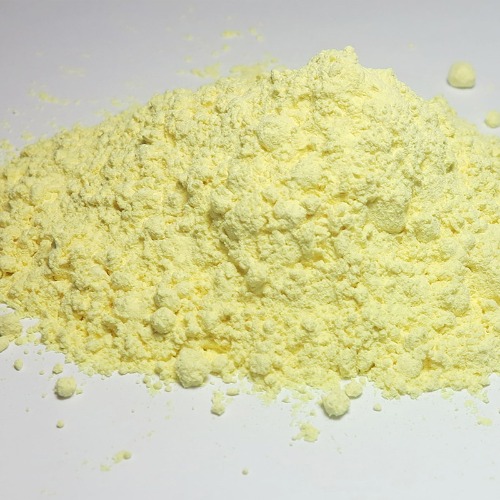
The relationship between an accelerator and a curing agent becomes clearer during compound development. Neither component works independently of the surrounding formulation. The curing agent provides the material involved in crosslink formation, while the accelerator helps control the pace at which the curing reactions take place.
A change in one component can alter the behavior of the whole curing system. Increasing the amount of curing agent may change the resulting crosslinked structure, while changing the accelerator can affect how quickly that structure develops during processing.
Manufacturers therefore have to consider the period before curing as well as the curing stage itself. Rubber compounds are commonly mixed, stored, shaped, and then exposed to curing conditions. The reaction should not progress too far during handling, yet it needs to develop properly once the compound reaches the intended curing stage.
Several parts of the process are connected:
- Mixing conditions affect how evenly ingredients are distributed.
- Storage conditions can influence compound stability.
- Forming determines the shape and thickness of the rubber part.
- Heating activates the selected curing system.
The curing system determines how the internal structure develops.
The balance between accelerator and curing agent can influence the transition between these stages. A change that makes curing begin earlier may affect processing time. A slower reaction may require different curing conditions or formulation adjustments.
The intended properties of the finished rubber also matter. A formulation for a flexible seal may not use the same curing approach as one designed for a rubber hose or a mechanical belt. Each product places different demands on elasticity, resistance to deformation, surface condition, and service environment.
This is why formulation work usually looks at the curing system as a complete combination rather than evaluating an accelerator or curing agent on its own. The interaction between ingredients determines how the compound behaves during production and how its internal structure develops during curing.
How Can Different Accelerator Systems Change Rubber Processing?
Different accelerator systems can change the way a rubber compound moves through the curing process. The differences may appear during mixing, forming, heating, and the development of the cured structure.
Some accelerator types are selected when a controlled curing response is needed during production. Others may be used where a different reaction pattern fits the rubber formulation. Sulfonamide-type, thiazole-type, and thiuram-type materials represent several accelerator groups used in rubber processing.
The choice can affect the balance between processing time and curing activity. A system that promotes a faster reaction may require careful control during earlier processing stages. A system with a slower reaction pattern may behave differently during heating and forming.
Processing conditions can also change how an accelerator performs. Mixing temperature, dispersion, material storage, and the order in which ingredients enter the compound can influence the final curing response.
One practical concern is premature curing. Rubber needs to remain workable while it is being processed. Once unwanted curing begins during mixing or forming, the compound can become harder to process and may not form as intended.
For that reason, manufacturers may examine:
- How the accelerator behaves during mixing
- Whether the compound remains workable during forming
- How the curing reaction develops during heating
- Whether curing remains reasonably uniform through the part
- How the selected system interacts with other ingredients
The choice of accelerator is also connected with the curing agent. A formulation designed around sulfur will behave differently from one using a peroxide-based curing system, so an accelerator cannot be selected without considering the curing chemistry around it.
In practical production, the goal is not simply to make the reaction faster. The useful result comes from controlling when the reaction begins, how it progresses, and how it fits the rest of the manufacturing sequence.
Where Do Rubber Accelerator Uses Appear in Rubber Manufacturing?
Rubber Accelerator Uses can be found across many types of rubber manufacturing because curing is part of producing a wide range of formed elastomeric components. The exact formulation depends on the rubber type, product geometry, processing method, and conditions expected during service.
Tires, for example, contain several rubber compounds with different functions. Their curing systems have to work with the particular compound and production process. Sealing components have another set of requirements because they need to maintain contact with mating surfaces while handling movement, pressure, temperature, or exposure to different substances.
Rubber hoses also rely on controlled curing. The compound has to develop a stable structure while retaining the characteristics required for bending and repeated movement. Conveyor components and industrial rubber parts may place different demands on resistance to wear, deformation, and mechanical loading.
Other applications include:
- Rubber seals used around equipment or fluid systems
- Hoses for conveying air, water, or other materials
- Belts used for mechanical transmission or material movement
- Molded rubber components for machinery
- Flexible rubber parts used in industrial equipment
Across these applications, the curing system is adapted to the product rather than selected as a separate ingredient decision. A component with a complex shape may require careful control of the curing response so that different areas of the part develop consistently.
Material thickness can also affect processing. Heat reaches different parts of a formed rubber component at different rates, which can influence how the curing reaction develops. Formulation and processing conditions therefore have to be considered together.
The role of accelerators becomes practical here. Rubber Accelerator Uses are not limited to shortening the curing stage. They also involve controlling reaction behavior so that the compound can move through production in a workable and predictable manner.
At the same time, the curing agent remains connected with the structure that develops after curing. The two functions meet within the same production process, even though they address different parts of it.
What Should Manufacturers Consider When Selecting a Rubber Curing Agent?
Selecting a Rubber Curing Agent starts with the rubber itself. Different polymer types respond differently to curing systems, so a material suitable for one formulation may not produce the same result in another.
The intended product also sets practical requirements. A rubber seal, hose, molded component, and flexible belt may all need different balances of elasticity, hardness, deformation resistance, and environmental resistance. The curing system has to support those requirements without creating problems during processing.
Several factors deserve attention before a curing agent is selected:
Rubber compatibility
The curing agent should work with the polymer and the rest of the formulation. Compatibility affects how evenly the curing reaction develops.
Crosslink structure
The type and distribution of connections between polymer chains influence the behavior of the finished material. The curing system should fit the properties required by the application.
Processing conditions
Mixing, forming, heating, and cooling all affect curing. A formulation needs to remain workable through the earlier stages before the intended reaction develops.
Interaction with accelerators
An accelerator changes the behavior of the curing system, so the two components need to be considered together. Changing one can alter the response of the other.
Service environment
Heat, mechanical movement, contact with fluids, and other working conditions can affect the choice of curing system. The cured structure needs to remain suitable for the environment in which the rubber part will operate.
Formulation stability
Ingredients need to remain reasonably well distributed and stable during storage and processing. Poor dispersion can create differences in curing behavior within the same component.
The distinction between the two material categories remains useful throughout formulation work. Rubber Accelerator Uses focus mainly on influencing the curing reaction and its processing behavior, while a Rubber Curing Agent participates in the chemical changes that establish the crosslinked rubber structure.
Looking at both roles together gives manufacturers a clearer way to adjust a rubber compound. The accelerator affects how the reaction proceeds, while the curing agent contributes to what the cured material becomes. Their interaction with the rubber polymer, other ingredients, and processing conditions determines how the formulation behaves from mixing through final curing.