English
 Português
 Español
 русский
 中文简体
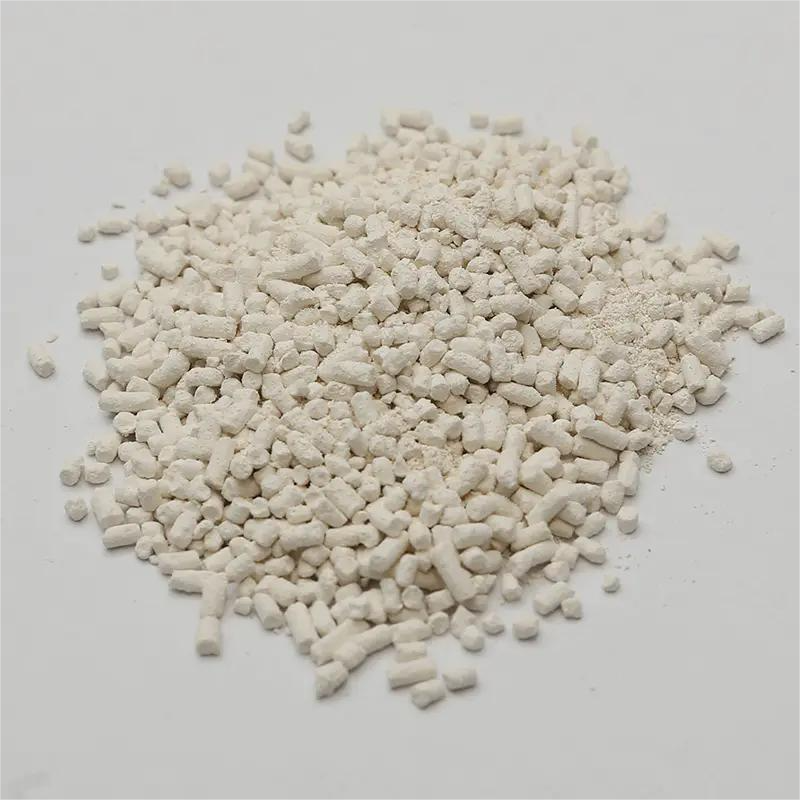
中文简体A Homogenizing agent is an essential additive in numerous industries, including paints, cosmetics, food, and rubber. Its primary function is to improve the uniformity and consistency of formulations by reducing particle size, enhancing dispersion, and stabilizing emulsions. Proper use of a homogenizing agent not only improves the appearance and texture of the product but also influences shelf life, stability under environmental stresses, and overall consumer experience. Understanding these effects is crucial for manufacturers seeking high-quality and reliable products.
Impact on Texture and Consistency
One of the immediate benefits of a Homogenizing agent is the improvement of product texture. In cosmetics, for example, creams and lotions achieve a smoother, more luxurious feel when properly homogenized. Similarly, food products such as sauces or dairy beverages benefit from even dispersion of fats and solids, preventing coarse or grainy textures. In paints and coatings, homogenization ensures uniform color and viscosity, which contributes to better application performance and surface finish. For rubber compounds, homogenizing agents aid in the uniform distribution of fillers and additives, resulting in consistent mechanical properties throughout the material.
Enhancement of Stability
Stability is another critical aspect affected by homogenizing agents. By reducing the size of dispersed particles and promoting even distribution, the risk of phase separation or sedimentation is reduced. This is particularly important in emulsions or suspensions, where oil and water phases or solid particles may separate over time. A stable formulation maintains consistent performance and appearance throughout its shelf life, preventing issues such as flocculation in paints, creaming in cosmetics, or sedimentation in liquid food products. The homogenizing agent thus plays a pivotal role in maintaining product quality from production to end-use.
Extension of Shelf Life
Closely linked to stability, the use of a homogenizing agent can extend the shelf life of products. Uniform particle distribution slows down degradation processes caused by uneven chemical reactions, microbial growth, or oxidation. For instance, in food products, smaller fat droplets and even emulsions reduce the risk of rancidity. In cosmetics, a well-homogenized cream is less likely to separate or form lumps over time. For industrial coatings, enhanced dispersion reduces the likelihood of pigment settling or binder segregation, which could compromise performance. This longevity is particularly valuable for products requiring long-term storage or transportation.
Compatibility with Additives and Formulation Flexibility
Homogenizing agents also improve compatibility between various formulation components. They facilitate the integration of hydrophobic and hydrophilic ingredients in complex systems, allowing manufacturers to develop versatile formulations with enhanced functionality. This compatibility ensures that active ingredients, pigments, fillers, and stabilizers remain evenly distributed, maintaining both efficacy and aesthetics. For rubber and polymer-based products, homogenization supports consistent mechanical strength and elasticity by promoting uniform filler dispersion and crosslinking.
Optimizing Product Performance
A Homogenizing agent significantly influences the texture, stability, and shelf life of diverse products, ranging from paints and cosmetics to food and rubber materials. By improving particle dispersion, preventing separation, and enhancing additive compatibility, these agents ensure consistent quality, prolonged usability, and good consumer satisfaction. Effective use of homogenizing agents is therefore an integral part of formulation design, allowing manufacturers to produce reliable and high-performance products across multiple industries.