English
 Português
 Español
 русский
 中文简体
Walk through a factory floor and you'll find rubber almost everywhere: car parts, seals, hoses, tires, shoe soles, cable insulation. Raw rubber, natural or synthetic, rarely meets the demands of these jobs. It's too soft, too sticky when warm, and not strong enough. Vulcanization changes that by rebuilding the rubber's internal structure, so the finished material is stable and predictable.
The vulcanizing agent is what ties rubber molecules together. That's the easy part to say. In practice, how well it does the job depends on a lot more than the chemical itself. Temperature, formulation, rubber type, mixing, and the other ingredients in the compound all push the result one way or another. A small change on the production line can be enough to shift it.
Knowing where these influences come from lets manufacturers pick materials with more confidence, keep production under control, and hold quality steady from batch to batch.
What Are Rubber Vulcanizing Agents and How Do They Work?
A vulcanizing agent creates chemical bonds between rubber molecules. Those bonds build a network through the material. Before that network exists, rubber is soft and deforms easily. Afterward, it's an elastic material that holds its shape.
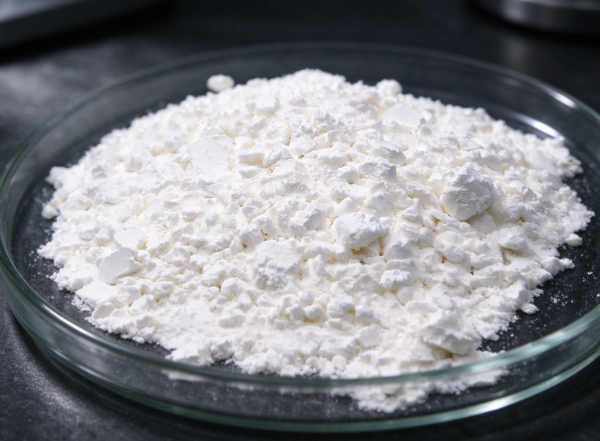
Skip vulcanization and you get familiar problems. The rubber gets tacky in the heat, sags under pressure, and doesn't bounce back well after repeated stretching. The network reduces all of these.
Not every agent works the same way. Sulfur is the workhorse in many conventional formulations. Peroxides are used when an application calls for better heat resistance or low compression set. Other systems exist for specialty rubbers and unusual production setups.
What decides the choice? Mostly these:
- Rubber type: Each rubber reacts differently to the same chemicals.
- Product requirements: Hardness, elasticity, strength, and heat resistance all pull the decision in different directions.
- Processing conditions: Production temperature, mixing method, and curing time shape the reaction.
- Application environment: Oil, chemicals, sunlight, and temperature swings can all dictate the curing system.
One thing to keep in mind: the agent doesn't act alone. What it delivers depends on the full formulation and on how the compound is processed.
How Does Temperature Affect the Performance of Rubber Vulcanizing Agents?
Temperature may be the single biggest lever in vulcanization. It controls how fast the agent reacts and how the bonds develop in the rubber.
Heat things up and the reaction generally speeds up. Cycle times drop and output goes up, which is attractive. But push too far and the rubber can cure unevenly or start to break down.
Some agents are also touchy about temperature. If the compound runs hot during mixing or shaping, curing can begin early. This is what people in the industry call scorch, and it leaves you with a compound that's hard to process and products that don't match.
There's a timing trade-off as well. Cure too slowly and the rubber may not finish building its structure within the cycle. Cure too quickly and the operator has little time to shape the part before it sets.
Here's how it plays out in common situations:
| Temperature Condition | Possible Effect on Vulcanization |
|---|---|
| Temperature is too low | The reaction may proceed slowly, resulting in incomplete curing. |
| Temperature is suitable | The vulcanization process can develop at a controlled rate. |
| Temperature is too high | Premature curing, uneven reactions, or material degradation may occur. |
| Temperature changes during processing | Different areas of the rubber may develop different curing conditions. |
Don't look at temperature on its own. The heating method, the condition of the equipment, the shape of the part, and the formulation all matter. A thick block of rubber heats through far more slowly than a thin sheet, so settings that work well for one may fail on the other.
Does the Type of Rubber Change Vulcanizing Agent Performance?
It does, and directly. Natural and synthetic rubbers have different molecular structures, so the same curing system can behave quite differently in each.
Natural rubber is the go-to for parts needing elasticity, flexibility, and good fatigue behavior. Sulfur vulcanization pairs naturally with it, since the bonds it forms support exactly those properties.
Synthetic rubber is a big family. Styrene-butadiene rubber, nitrile rubber, EPDM, and silicone rubber each have distinct chemistry, and that chemistry affects how they cure.
Nitrile rubber, for example, is the usual pick where oil and fuel are around. EPDM is common outdoors, where weather, moisture, and temperature swings are the issue. Silicone has its own curing requirements, thanks to its unusual backbone.
Put simply, an agent that's ideal for one rubber can be a poor fit for another.
| Rubber Type | Common Material Characteristics | Vulcanization Considerations |
|---|---|---|
| Natural Rubber | High elasticity and flexibility | Often uses sulfur-based systems. |
| Styrene-Butadiene Rubber | Wear resistance and general-purpose performance | Requires a formulation suited to its structure and application. |
| Nitrile Rubber | Resistance to oils and fuels | The vulcanization system must support its intended chemical and mechanical properties. |
| EPDM Rubber | Weather and aging resistance | Requires a suitable curing system for outdoor applications. |
| Silicone Rubber | Heat resistance and flexibility | Often uses specialized curing agents and processing methods. |
Before settling a recipe, check that the rubber and the agent actually work together. It saves trouble later and cuts the chance of uneven cures.
Why Is the Vulcanizing Agent Dosage Important?
Dosage changes the structure and performance of the finished rubber, and it can go wrong in either direction.
Add too little and the network stays thin. The product ends up soft, loses its dimensions, or deforms under repeated loading. Over long service, it may never hold its original shape.
Add too much and you don't get a better product, either. Extra agent can trigger side reactions, make the rubber stiff, or change other properties. In some compounds it also affects the surface. Sulfur blooming to the surface as a whitish film is a familiar example.
What's right depends on the rubber, the curing system, the other ingredients, and what the part has to do.
A seal, for instance, has to balance flexibility against compression resistance. A machine part may need more hardness and strength. A shoe sole cares about flexing again and again without cracking.
So dosage can't be set by looking at one property. Everything has to be weighed together.
It's also tied to the rest of the recipe. Accelerators, activators, fillers, and processing aids all change how efficiently the cure runs. Change one and you may need to adjust another.
Careful formulation work avoids wasted material while still hitting the properties the application needs.
How Do Accelerators and Other Additives Influence Performance?
Vulcanizing agents rarely work solo. They're normally paired with other chemicals that steer the process and shape the final properties.
In many sulfur systems, accelerators are key. They manage the reaction between sulfur and the rubber so it moves at a workable pace. Different accelerators act differently, and that affects both processing time and the final network.
Activators back them up. Zinc oxide and fatty acids are the usual pair in conventional sulfur cures, helping the system work efficiently.
Then there's the supporting cast. Antioxidants guard against heat and oxygen. Fillers change strength, hardness, wear resistance, and how the compound processes. Plasticizers and softeners adjust flexibility and make the rubber easier to handle.
Their interactions with the vulcanizing agent look like this:
- Reaction control: Accelerators set how quickly vulcanization develops.
- Chemical activation: Activators help the reaction along in certain systems.
- Aging protection: Antioxidants slow deterioration in storage and in use.
- Physical property adjustment: Fillers and softeners change the mechanical behavior.
- Processing improvement: Some additives help mixing, shaping, and flow.
But every addition makes the formulation harder to manage. Some additives interfere with curing or with how the agent spreads through the compound.
A bad combination can speed up or slow down the reaction, or leave the finished material less stable. Compatibility across the whole ingredient list needs checking during development.
A good compound is a balance: the chemistry, the processing needs, and the end use all have to line up.
Can Mixing Conditions Affect the Distribution of Vulcanizing Agents?
Yes. You can pick the right chemicals and weigh them perfectly, and poor mixing will still undo the effort.
During compounding, the agent and other ingredients have to be spread evenly through the rubber. If one spot carries more curing chemical than another, it will cure differently, and the part ends up with an uneven internal structure.
Hardness, elasticity, and strength may then vary across the product. In bad cases there are weak zones, and those shorten the part's life.
Several things in the mixing step matter here.
Mixing sequence
The order of addition changes how ingredients disperse. Many go in early, while the vulcanizing agent is often held back until later to lower the risk of premature reaction.
The better order depends on the formulation and the process. Sticking to one fixed procedure keeps batches closer together.
Mixing intensity
Mixing has to supply enough mechanical work to spread everything through the rubber. Too little leaves clumps and poorly dispersed particles.
Too much, and you generate heat and shift the compound's behavior. Dispersion and temperature control have to be balanced.
Equipment condition
Worn rotors, an unsuitable setup, or poor cooling all hurt the consistency of the compound.
Routine inspection and maintenance cut down on these problems.
Material compatibility
Some ingredients just don't disperse easily. Their physical form and how well they get along with the compound affect mixing.
You may have to tune the process to get an even spread without damaging the material.
If a product needs uniform properties throughout, mixing quality is critical. It affects the agent, yes, but also how reliable the whole process is.
How Do Curing Time and Processing Conditions Affect the Final Product?
Temperature sets how fast curing can go, but time is the other half. Together they decide how far the reaction gets.
Cure for too short a time and the rubber is under-vulcanized. The network is incomplete, so strength, elasticity, and resistance to permanent deformation all suffer.
Over-curing has its own costs. Depending on the rubber and the system, long heating can alter the mechanical properties. Some compounds get harder and less flexible. Others lose strength, a behavior called reversion in natural rubber.
It isn't always a straight line, either. Compounds respond differently to heat, and the same cure time can give different results depending on the material, the part's shape, and how the heat spreads.
Processing conditions go beyond the press, too. How raw materials are stored, moved, and prepared can affect how agents perform.
Poor storage, for example, can compromise some chemicals. Moisture, contamination, and too much heat all cause trouble before the compound even reaches the mold.
Keep an eye on these:
| Processing Factor | Potential Influence |
|---|---|
| Curing time | Determines the extent of the vulcanization reaction. |
| Heating consistency | Influences the uniformity of curing throughout the product. |
| Mold condition | Affects heat transfer and product formation. |
| Raw material storage | Helps maintain the stability of chemical ingredients. |
| Processing sequence | Influences when and how vulcanizing agents react. |
Complex shapes and parts with uneven thickness are the toughest, because heat doesn't spread evenly. Looking at the whole production chain works better than adjusting curing settings alone.
What Should Manufacturers Consider When Selecting Rubber Vulcanizing Agents?
Picking an agent isn't just a matter of comparing chemical specs. The curing system, the rubber, the production method, and the end use all have to fit together.
What works in one formulation may disappoint in another. Start from the requirements of the finished product and work backward.
Product application
What the part is for tells you which properties count. Automotive seals, industrial hoses, rollers, and shoe components face very different conditions.
Some need to flex constantly. Others need heat resistance, low compression set, or tolerance of oils and chemicals.
Compatibility with the rubber compound
The agent needs to suit the chosen rubber and the rest of the recipe. If it doesn't, expect dispersion problems or odd behavior during cure.
Processing requirements
Look at the mixers, shaping methods, heating setup, and production sequence you actually have. The curing system must work on your line, not just on paper.
Finished product properties
Hardness, elasticity, tensile strength, wear resistance, and aging performance all need to be balanced. Improving one often costs you another, so judge them as a set.
Production stability
Consistent curing keeps quality level from batch to batch. Ask how sensitive an agent is to shifts in temperature, mixing, and other conditions.
Storage and handling
Agents have different storage and handling needs. Good packaging, suitable conditions, and careful stock management keep the chemicals stable until use.
Before a new agent goes into regular production, run trials. Lab tests show curing behavior and physical properties, and small production runs show how the formulation behaves under real conditions.
Talk across teams, too. Suppliers, formulation engineers, and production staff each see a different piece of the process. When they share what they know about materials, problems on the line, and product demands, better curing solutions tend to surface.
A vulcanizing agent is just one part of a bigger system. How it performs depends on its interaction with the rubber, the additives, the equipment, and the production conditions. Once those links are clear, choosing materials and tuning formulations for different rubber products gets a lot easier.